© 2025 Eureka Network AISBL.
All rights reserved.
All rights reserved.
Impact
By David Silverberg
Turkish company, GOHM Electronics, is surging in embedded software and edge computing, rising sectors that create vital technology for companies seeking real-time data processing by devices. In several Eureka projects, GOHM Electronics has explored its technology’s applications in factory machinery, healthcare devices, drones and agriculture monitoring.
If you want to see the framework behind a powerful car, you look under the hood. If you want to see what head-spinning innovation is threaded through our next-gen devices, look to GOHM Electronics.
Based in Muğla, Türkiye, GOHM Electronics specialises in embedded intelligence and edge computing, two areas that identify shortening the time it takes for technologies to communicate with each other as the backbone to advanced engineering.
Unlike traditional artificial intelligence, which needs powerful, centralised cloud servers, embedded intelligence is characterised by its decentralised system and its ability to process data directly and quickly on a local device. This model counters the cloud computing approach, where a machine’s signal zips into the company’s cloud programming space and flings a reply to the device.
GOHM Electronics Chief Executive Officer and co-founder Cem Ayyildiz explains how the company produces both the hardware and software to run such complex deeptech programmes.
“Eureka and the CELTIC-NEXT, ITEA and Xecs Clusters allowed us to make international partnerships happen,” says Ayyildiz, adding how Eureka has provided access to funding for several research and development projects that have helped establish GOHM Electronics as a trailblazing leader in embedded intelligence.
GOHM Electronics leveraged a Eureka Cluster ITEA project, CyberFactory#1, to develop a technology known as “radio-frequency fingerprinting.” This innovation uses a communications model to allow autonomous vehicles inside massive factories to be guided correctly. A robotic vehicle cannot be “hacked” by a non-legitimate command, Ayyildiz explains, when the loop is closed using the radio-frequency fingerprinting technology.
This technology differs from traditional Wi-Fi security, which operates at the software layer using encryption keys that can easily be copied or stolen. Radio-frequency fingerprinting moves the security to the physical layer. By using machine learning to identify unique radio DNA, GOHM Electronics can distinguish between a legitimate robot and an attacker with 100% certainty.
Airbus is already layering this next-level idea to their manufacturing facilities. Having had the chance to work with Airbus has been invaluable for GOHM, Ayyildiz shares. “We have learned from them in so many ways, such as the standards they have to apply to integrate our system; all of these lessons are important to us as we grow.”
The team is now also developing new ways to create radio-frequency fingerprinting tools to secure the communication line between devices like drones. “Each device has a way of being identified through its transmissions and we want to create new approaches to protecting that communication link so it cannot be interfered with,” he adds.
Radio-frequency fingerprinting is something the company is hoping “to grow over time,” says Ayyildiz, “and we are excited to build the embedded intelligence ecosystem that could make this a big solution for Europe and around the world.”
In a Eureka project with the CELTIC-NEXT Eureka Cluster, GOHM Electronics explored drone connectivity with a back-end system brimming with videos and photographs. Ayyildiz explains GOHM Electronics worked with a drone company to develop cameras and sensors with embedded intelligence. The drones take a photo of a person receiving a grocery order and match this with the customer’s likeness instantaneously – a neat security measure.
The speed at which such devices communicate to each other has to be cut to as short as possible. Any latency delays, for example, could degrade the experience of layering this service onto a new fleet.
In the healthcare sector, GOHM Electronics’ embedded intelligence approach helped create M-KIT, an electronic stethoscope that enables doctors to conduct medical inspections remotely.
“These solutions are built to save lives by replacing guesswork with precision data in high-stress environments,” says Ayyildiz, “and with M-KIT, for example, by continuously analysing a patient’s vitals and detecting anomalies early, we enable medical teams to intervene faster. This reduces the burden on hospital staff by allowing for more efficient patient management while significantly increasing the survival chances and safety of the patients themselves.”
Similarly, GOHM Electronics launched a new type of emergency management software born out of the ITEA Eureka Cluster project, SafeRescue. It seeks to save the lives of victims and first responders by allowing emergency dispatchers to track, locate and direct teams to rescue at-risk personnel during crises.
GOHM Electronics partnered with Borçelik to support the BAKUT rescue team, focusing on vital sign monitoring and indoor positioning for first responders in fire-emergency scenarios where localisation infrastructure was unavailable.
And for Turkish residents buying juice at a grocery store, there is a good chance GOHM Electronics had something to do with the sweet substance they leave with.
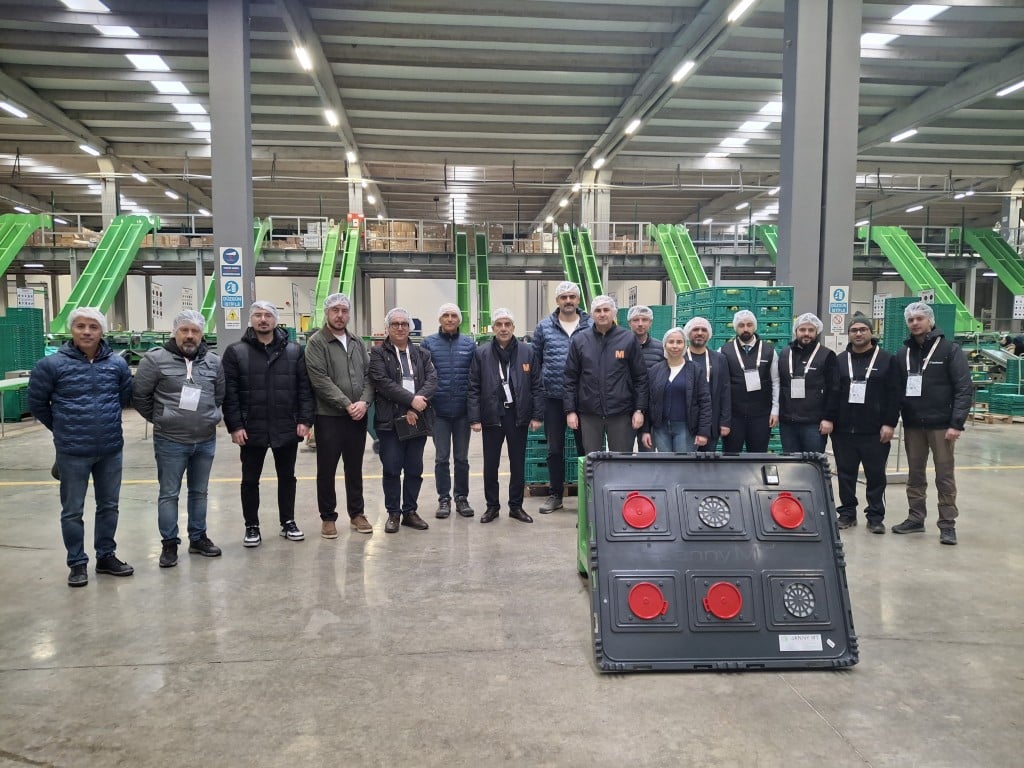
Through the Eureka Cluster Xecs, the company installed cameras and sensors in manufacturing facilities for two major juice makers in Türkiye, laser-focused on one task: to ensure nothing dangerous or unexpected ends up in the cans.
Along with other development partners, who run a specialised algorithm, GOHM Electronics scans the juice products at lightning-quick speed to ensure “nothing is in the juice that should not be there,” Ayyildiz says. “By detecting vibration or thermal anomalies in real-time, our embedded intelligence can predict potential failures before they happen.”
This project also includes another corollary task: making predictive maintenance algorithms for the manufacturing facilities. This calculation figures out when factory-floor machines have to be replaced, ensuring a continuous flow of production that does not slow down even for ten minutes.
“When a machine breaks down in a factory, it costs a lot of money to repair or replace. We created an algorithm that integrates inside the software and hardware of machinery to alert facility owners when it is about to break down,” he adds.
As if GOHM Electronics were not busy enough, the company launched a spinoff based on some deep research and development the team conducted in the agricultural space. FreshSens harnesses tiny sensors that can detect the health of fruit trees producing cherry, avocado and kiwi.
“Through our sensors and our algorithm, we can detect the rate at which something is ageing,” says Ayyildiz, adding how a study found the technology reduced post-harvest losses by up to 40%.
He credits Eureka’s funding programmes and events as sparks that gave these projects the energy to get off the ground.
When asked how Eureka programmes can help small businesses in Europe flourish and succeed, Ayyildiz is quick to point out a vital highlight: “funding is one thing, but to enter the circle of people in your sector is another,” he says.
“We go to as many Eureka events as we can to talk to others about our projects and hear what other companies are doing. Sometimes, you can find a partner at these events and that can be an important part of scaling your business and learning from other companies.”
Through our funding programmes, national/regional funding bodies support SMEs, large companies, universities and research organisations conducting R&D and innovation projects together beyond borders to achieve great results. Learn more about our programmes and discover whether we have a funding opportunity for your organisation.
Eureka programme and project name: Clusters, ITEA Safe Rescue
Countries involved: Türkiye, the Netherlands
Project duration: 2018-2021
Eureka programme and project name: Clusters, ITEA CyberFactory#1
Countries involved: Türkiye, Canada, Finland, France, Germany, Portugal and Spain
Project duration: 2018-2022
Eureka programme and project name: Clusters, CELTIC-NEXT IEoT
Countries involved: Türkiye, Austria and Portugal
Project duration: 2020-2023
Eureka programme and project name: Clusters, Xecs DIEFI2
Countries involved: Türkiye and Portugal
Project duration: 2025-ongoing
Got an innovative idea? Explore our funding opportunities designed to support groundbreaking projects and help turn your vision into reality.
Secure the resources you need to bring your ideas to life.
See all open calls