© 2025 Eureka Network AISBL.
All rights reserved.
All rights reserved.
Impact
By David Silverberg
Families should quickly learn if their new-born child has any genetic conditions, a process plagued by inaccuracies and lag time. Danish startup gMendel is transforming genetic screening through artificial intelligence, making diagnostics faster, more accurate and scalable. Several Eureka projects steered the company’s focus to this vital field it thrives in today.
The inspiration behind gMendel stems from a personal experience within founder Chris Kyriakidis’ family. A child was diagnosed with a genetic condition, but the diagnosis came only after a prolonged and challenging journey to find answers.
Based in Denmark, Kyriakidis and his wife experienced firsthand how difficult and time-consuming it can be for families to obtain a clear diagnosis. The experience highlighted the importance of providing families with rapid and accurate genetic insights, enabling earlier intervention, informed care decisions and better long-term outcomes. Yet, many diagnostic pathways remain slow, fragmented and prone to inaccuracies.
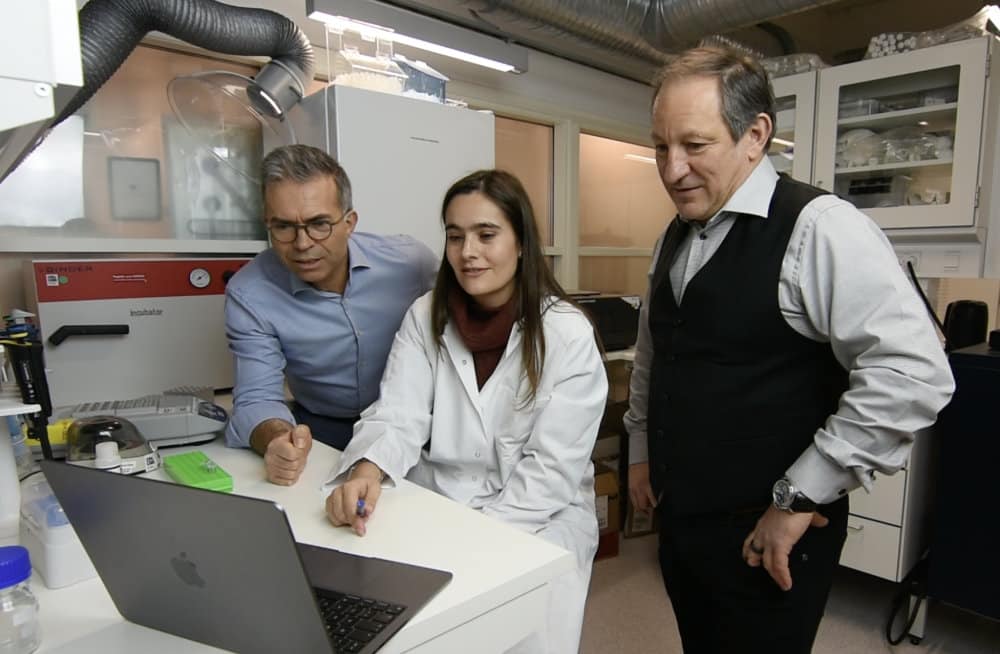
In 2020, the long-time pharmaceutical executive decided to do something about this. He founded gMendel, a technology company designed to improve diagnostic systems at the beginning of life. The company’s initial focus was prenatal screening, supported by several Eureka projects that helped advance its technology and capabilities. Over time, gMendel recognised an even greater opportunity to improve healthcare through newborn screening and subsequently concentrated its efforts on delivering faster and more accurate genetic testing for newborns.
gMendel aims to significantly reduce the cost and fully automate the analysis of deoxyribonucleic acid (DNA) using genomics combined with artificial intelligence, a level up from what is currently the norm. Its artificial intelligence platform, titled Phivea, blends pre-trained multiple base and conceptual models that can be tweaked to detect genetic disorders.
The way contemporary genetic screenings identify new-borns with Down’s syndrome or cystic fibrosis is via a biochemical process. Kyriakidis explains, “this has too many false positives and is not very accurate. Plus, it takes a long time for families to receive a diagnosis”.
And the lengthy wait for this diagnosis can be costly. A 2023 report found that early rare disease diagnoses could save as much as 500,000 US dollars per patient. Despite this, a 2024 survey concluded that a patient’s diagnostic journey takes nearly five years on average.
gMendel’s technology is gaining traction. Its clients include hospitals and national health systems in Denmark, Paraguay and Rwanda, with a long-term vision touching on an ambitious goal: to usher in fast and reliable new-born screening processes of genetic conditions in the Global South, where these types of diagnostic tools are rare.
In doing so, the Danish company aims to support equitable access to life-saving interventions across underserved regions.
Scalability is crucial here, says Kyriakidis. Because the platform processes hundreds of thousands of samples, it significantly increases the speed and efficiency of genetic screening for large populations. He adds how the diagnostic tool’s high level of automation significantly lowers errors and operational fees.
“What I find fulfilling about running gMendel is how we can have an impact on families who need our technology the most,” Kyriakidis says.
What gMendel offers is a technological solution to a vital problem: how can parents accurately discover if their child has a genetic condition and prepare by lining up the right treatment or support plan?
gMendel leverages so-called multi-level multiplexing DNA sequencing and demultiplexing of barcodes, which allows researchers to classify and detect a large number of DNA samples at a time.
A real-time analysis tool, strengthened by artificial intelligence, connects to their DNA sequencers, “so we can start the analysis right from the first minute of data generation,” Kyriakidis notes, adding how this coupling gives physicians a quicker diagnosis than biochemical methods that could take days.
Participating in several Eureka projects was central to gMendel understanding what area of screening to dedicate their resources to in the coming years.
For example, engaging with Spanish partners in a Eurostars project in 2023 allowed the team to develop a prenatal screening test using artificial intelligence and blockchain technology.
Kyriakidis found this department of screening to be challenging. “Prenatal screening was not right for us then; it is an area we will move into in the coming years, but for now, it is not commercially viable,” he says.
However, the Eurostars project triggered a pivot for the company to solely focus on new-born screening, and to perfect their technology.
Three years ago, gMendel also took part in an Innowwide project on diagnosing Klinefelter syndrome. The project targeted Egypt, which has a proportionally high number of children with the genetic disorder. As children with this condition age, they may develop breasts and exhibit no facial hair.
gMendel’s project focused on coming up with a solution to detecting Klinefelter after birth, which is expected to be four times less expensive compared to the standard diagnostic method.
“Because Klinefelter syndrome is often difficult to detect, if families can learn about the diagnosis earlier, they can adopt more actionable behaviour,” Kyriakidis says.
Working with Egyptian subcontractor, Onyx Pharma, gMendel is aiming to enter the North African sub-continent and Middle East, beginning with Egypt, with their diagnostic applications.
Kyriakidis credits Eureka with both facilitating funding for the backbone of gMendel’s projects and establishing a strong networking model. “If we did not have funding, I do not think we would have been able to survive,” he says bluntly.
Moreover, having the opportunity to network with universities and clinics “and to grasp the problems in specific regions helped us a lot,” he notes, adding how the projects helped them visit Saudi Arabia to learn about the country’s genetic screening needs in view of expanding there.
But even just applying to the Eureka programmes offered a corollary benefit gMendel did not expect. “By writing down our intent and processes in such a focused way, we were able to fine-tune our own vision for the company,” says Kyriakidis.
The overarching goal is lofty but within reach, he adds. “We not only aim to reduce infant mortality but also to better understand the diseases we study, leading to improved treatments in the future,” says Kyriakidis.
Through our funding programmes, national/regional funding bodies support SMEs, large companies, universities and research organisations conducting R&D and innovation projects together beyond borders to achieve great results. Learn more about our programmes and discover whether we have a funding opportunity for your organisation.
Eureka programme and project name: Eurostars-3 A novel non-invasive prenatal screening tool for detection of Genetic Disorders powered by AI (GDSCREENING)
Countries involved: Denmark and Spain
Project duration: 2023-2025
Eureka programme and project name: Innowwide Sea-change technology for the diagnosis of genetic disorders in Egypt (GMEG)
Countries involved: Denmark targeting Egypt
Project duration: 2023

Were you inspired by this story and have a project idea you want to realise?
Eurostars Call 11 is opening on 9 July 2026. Submit your project by 10 September 2026.
Eurostars is open to innovative projects across any field. We don’t set a theme for Eurostars calls, so there are no limits to where your innovation could take you.
Got an innovative idea? Explore our funding opportunities designed to support groundbreaking projects and help turn your vision into reality.
Secure the resources you need to bring your ideas to life.
See all open callsFunding map
Find out more